Research Topic
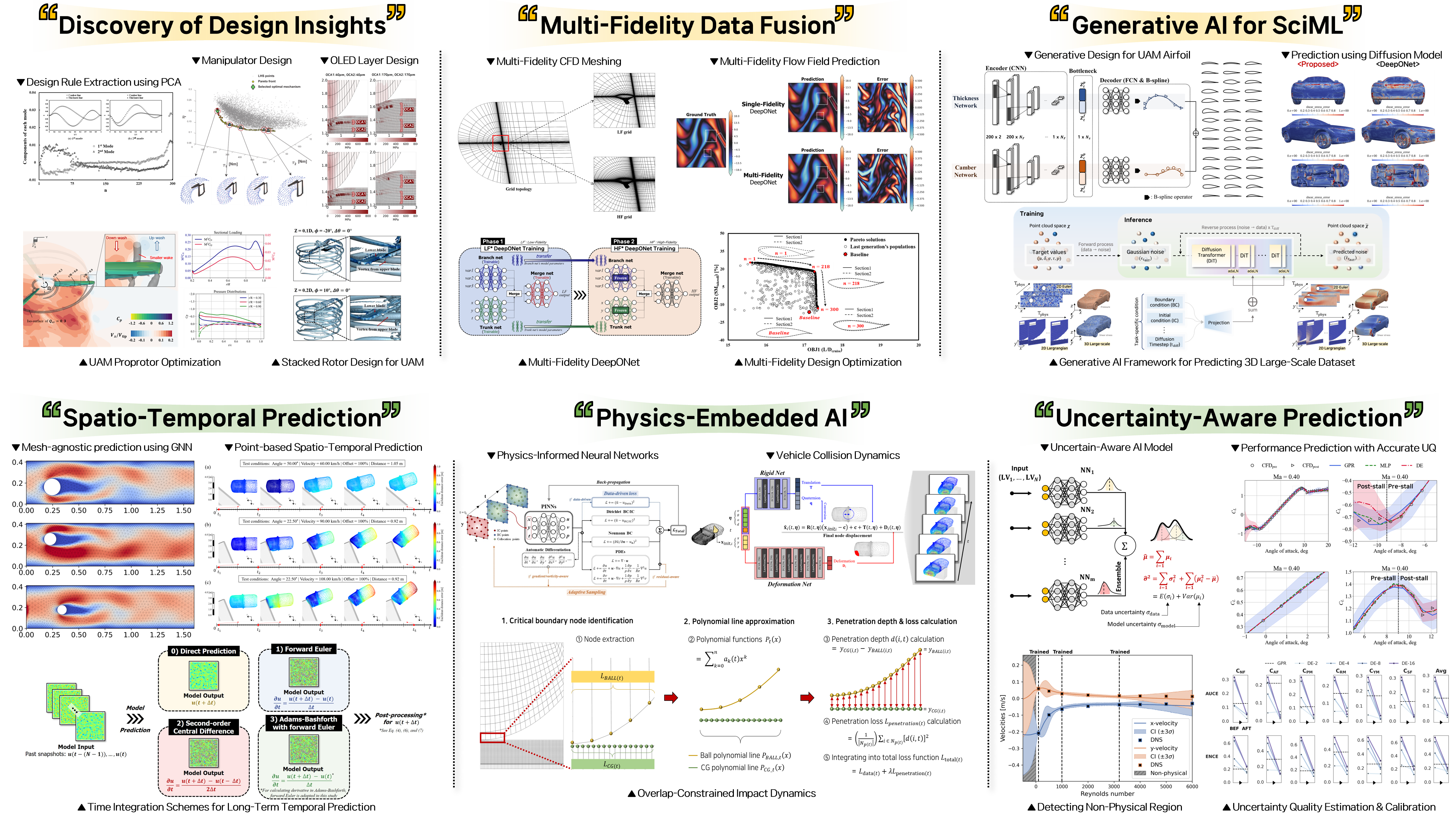
Physics-Guided AI for Engineering Simulation & Design
We integrate physical understanding with reliable AI workflowsto speed up simulations, predict future physical behavior, and guide better design decisions.
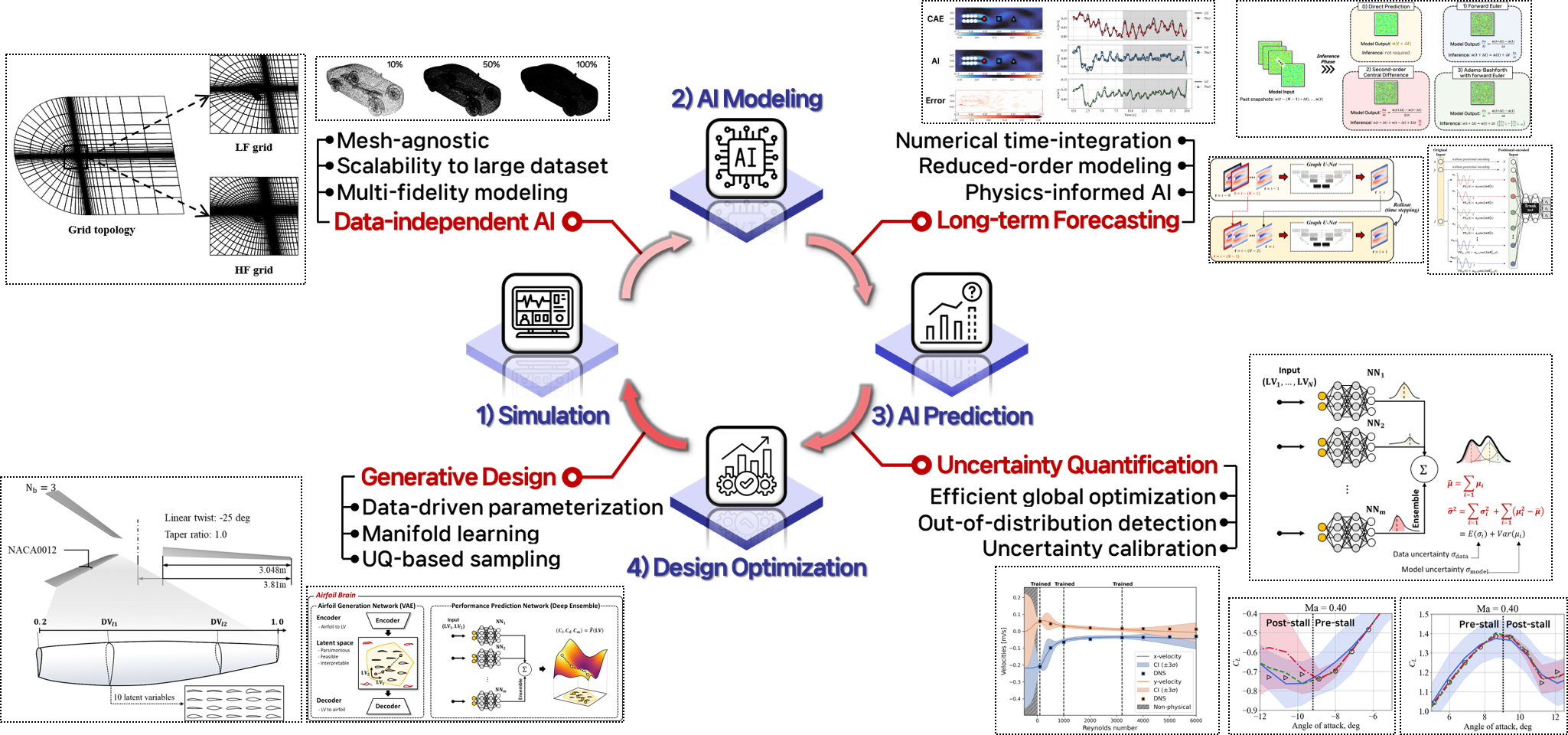
Simulation
Computer simulations provide physics-consistent data that anchor AI models to real engineering behavior.

AI Modeling
AI models learn how physical systems behave by capturing patterns and rules, not just fitting data points.

AI Prediction
Trained AI models forecast how systems evolve over time, turning simulation knowledge into usable future insight.

Design Optimization
AI connects prediction to decision-making by searching for better designs under physical and practical constraints.

Data-Independent AI
AI remains reliable even with limited, noisy, or inconsistent data, so its performance does not depend on a specific setup.

Long-Term Forecasting
AI predicts future physical behavior over long time horizons while staying consistent with physical trends.

Uncertainty Quantification
AI quantifies uncertainty to inform how much confidence engineers should have in each prediction.

Generative Design
AI suggests numerous novel design candidates, enabling efficient discovery of high-performing designs.